

Virtual Program
Images of the Sibylline Prophecy
The Sibylline Prophecy manuscript, preserved in the Bibliothèque Interuniversitaire de Médecine in Montpellier, France, dates to the 13th century but is rooted in a tradition of prophetic texts that spans back to the 10th century and earlier. These writings, attributed to the Sibyls—ancient female prophets—blend classical pagan themes with emerging Christian ideas. The illuminated illustrations within the manuscript not only enhance its mystical appeal but also reflect the medieval fascination with prophecy and divination.

A 16th-century woodcut depicts the Cumaean Sibyl (Amalthea) burning some of the Sibylline books, with Tarquin observing the scene.

Roman de Fauvel: A Literary and Musical Milestone

11r
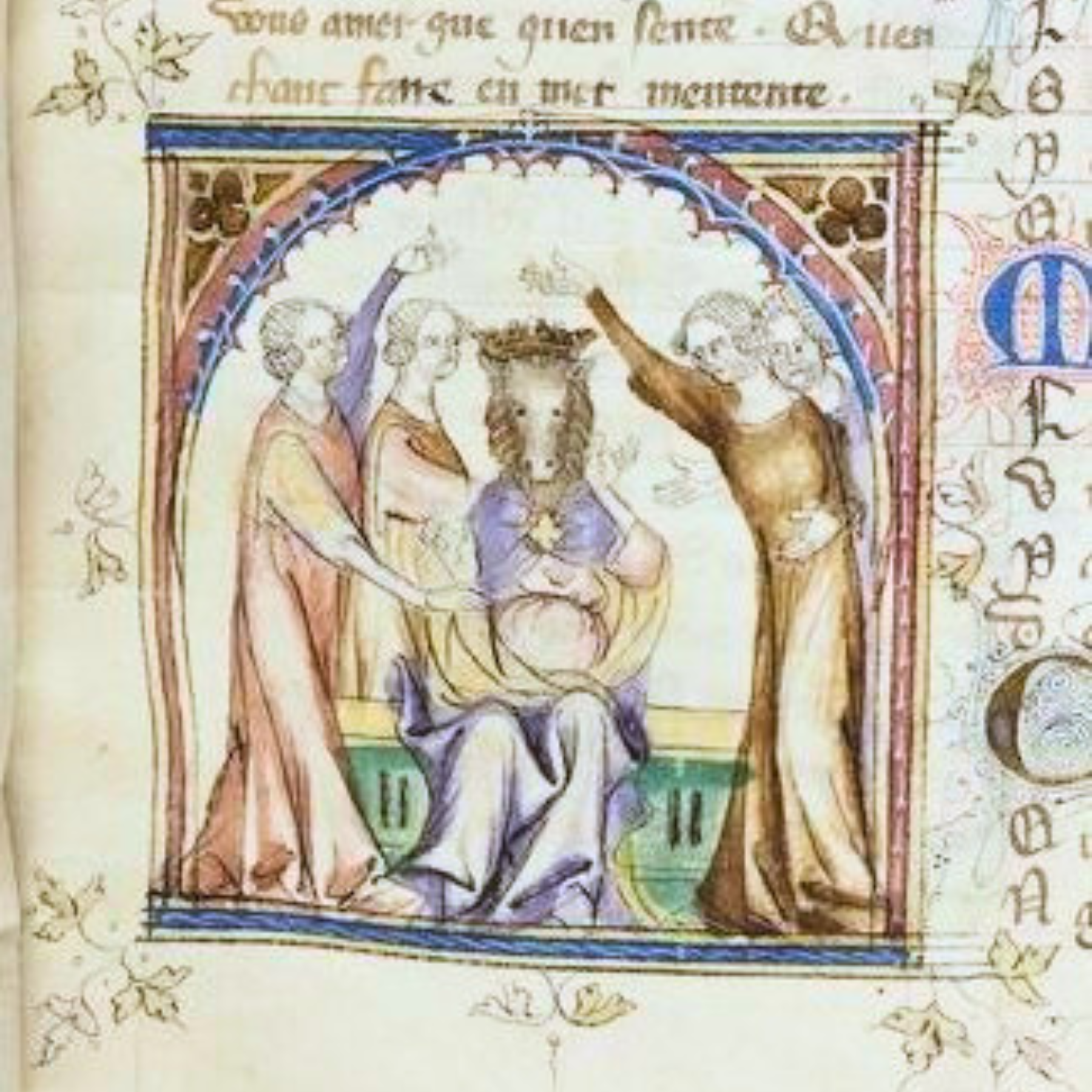
Roman de Fauvel (French for "Romance of Fauvel") is a significant French poem by Gervais du Bus, valued for its literary quality and its importance in music history. The poem critiques contemporary political and religious abuses, centering on its protagonist, Fauvel, a fawn-colored stallion. The letters of his name represent the initials of the cardinal sins.
A manuscript of the poem, dated 1316 and lavishly illuminated, is preserved at the Bibliothèque Nationale in Paris. This manuscript includes 130 musical works interspersed within the narrative, forming a rich anthology that spans over 150 years. Some pieces are presented in their original form, others have been adapted for the poem, and some were likely composed specifically for it. Among these works are five pieces by the French composer Philippe de Vitry, which are among the earliest examples of music in the Ars Nova style, a movement that Vitry helped to establish.

2r

14r
26r


26v
28bis-v

28ter-v

40r
Carmina Burana: A Glimpse into Medieval Poetry

The Wheel of Fortune from Carmina Burana
Carmina Burana is a 13th-century manuscript, written in 1230 by two scribes in early gothic minuscule on 119 sheets of parchment. Bound into a small folder known as the Codex Buranus, the text was partially disordered during binding, with some pages likely lost.
The manuscript contains eight miniatures, including The Wheel of Fortune, symbolizing fate; The Forest, depicting nature's allure; a pair of lovers; scenes from the story of Dido and Aeneas; a scene of drinking beer; and three scenes of gaming with dice, tables, and chess. Each image reflects the vibrant spirit and themes of this significant medieval collection, now housed in the Bavarian State Library in Munich.

The Forest from the Carmina Burana
Ad Mortem Festināmus: A Reflection on Death and Redemption
Ad Mortem Festināmus is a monodic song featured on folio 26v of the Llibre Vermell de Montserrat, a manuscript dating back to 1399. The lyrics explore the inevitability of death and urge listeners to abandon sinful behaviors. Interestingly, the initial verses of this piece share similarities with “Scribere Proposui,” a song from the 1582 collection Piae Cantiones.
This haunting melody has been interpreted by various artists, notably the electronic neo-medieval group Qntal, which transformed the original lyrics into a club hit in 1992, merging medieval themes with modern musical styles. Below are images and recordings that highlight the significance and artistic impact of this powerful composition.

Image from Ad Mortem Festināmus ("To Death We Hurry") manuscript.

One week—Two unforgettable ensembles you won't want to miss!

Special Event: Quicksilver • March 24
Early Moderns: Extravagant New Music from the Seventeenth Century
Experience Quicksilver's captivating "Early Moderns" program, showcasing the emotional depth and musical innovations of the early modern period in a special one-night performance.

Ensemble Affect • March 28–30
Home Away from Home
Discover "Home Away from Home," where Baroque composers blend cultures and reflect modern immigrant stories. Experience timeless music that transcends borders!
Explore the rest of the season!