The PDF program is not optimized for mobile view. The virtual program below provides supplemental information to the program, separate from the program booklet.
Program Book update/correction: Alyssa Wright will replace second violinist Ha Na Lee.
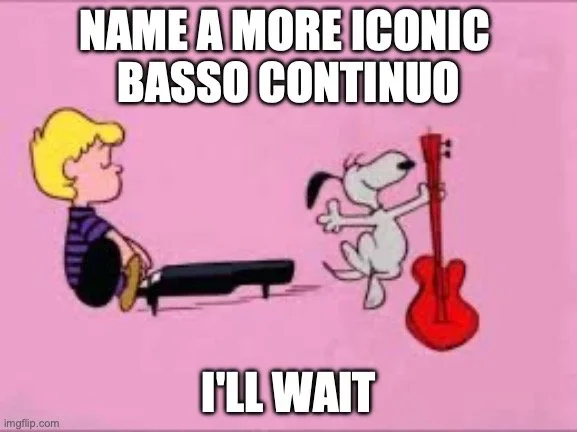
Basso Continuo
From musecool.com
What is Basso Continuo ?
Basso continuo, often simply called “continuo,” is a foundational feature of Baroque music. It refers to a continuous bass line that provides harmonic structure and rhythmic stability for a piece. The term comes from Italian and literally means “continuous bass.” Used extensively from around 1600 to 1750, basso continuo is one of the defining characteristics of the Baroque period.
The basso continuo part is usually played by two instruments: a low melodic instrument (such as cello, violone, or bassoon) and a chordal instrument (such as harpsichord, organ, lute, or theorbo). The bass instrument plays the written bass line, while the chordal instrument realizes the harmonies indicated by numerical figures written beneath the notes — a practice known as figured bass.
Function and Role in Baroque Music
Basso continuo served as the harmonic and rhythmic backbone of Baroque ensembles. It underpinned everything from solo arias and instrumental sonatas to large-scale operas and sacred choral works. Composers would write a bass line with symbols (figures) that suggested intervals, allowing skilled performers to improvise appropriate chords and harmonic progressions.
In this way, the continuo player was not just an accompanist but a collaborator, contributing creatively to the harmonic texture of the music. The realization of the continuo could vary significantly from one performance to another, making each rendition of a piece slightly unique.
Instrumentation of the Continuo Group
The basso continuo group was flexible and adapted to the needs of each composition and performance setting. Common pairings included:
Harpsichord + Cello – typical for chamber music and secular vocal music
Organ + Cello – often used in sacred settings
Lute or Theorbo + Viola da Gamba – frequently found in early Baroque works
Multiple continuo instruments – in larger ensembles, continuo could be reinforced by several instruments playing together
The choice of instruments influenced the sound and mood of the piece, offering both subtlety and richness to the harmonic texture.
Learn more at https://musecool.com/us/glossary/basso-continuo/
Women Composers of the Baroque Period
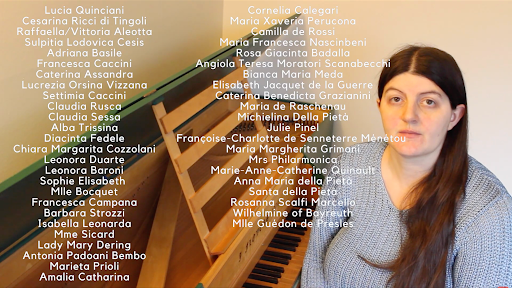
Women Composers of the Baroque Period
Dr. Alice M. Chuaqui Baldwin, harpsichordist hosts a wonderful Youtube channel covering all sorts of keyboard-related topics. In her video “Women Composers of Baroque Music” Baldwin covers her list of “ten of the more prolific, and arguably most important female Baroque composers whose music still exists today.” She shares a larger list of women composers of the Baroque era, along with their known, (if any) surviving works. Mrs Philarmonica makes her top ten list:
"She was most likely an English composer, since her music was published in London, and the only extant works by her—or at least the only music published under the pseudonym "Mrs Philarmonica"—was a collection of trio sonatas published in London around 1715. Though her works are relatively few in number—at least compared to several of the other composers on this list—she has been included because by the late Baroque period there were fewer women overall composing than in the 17th century. She is one of the few composers from the early 18th century for which we have any music at all, so under these circumstances, she is actually considered one of the more prolific women composers of the late Baroque period.”
Dr. Baldwin’s top ten list includes:
Francesca Caccini (1587–after 1637)
Chiara Margarita Cozzolani (1602– ca. 1677)
Barbara Strozzi (1619–1677)
Isabella Leonarda (1620-1704)
Antonia Padoani Bembo (c 1640–1720)
Camilla de Rossi (fl. 1707–10)
Elisabeth Jacquet de La Guerre (1665–1729)
Maria Margherita Grimani (fl. early 18th c.)
Mrs Philarmonica (fl. 1715)
Rosanna Scalfi Marcello (fl. 1723–42)
What is the correct spelling of his name?
There multiple spellings that perhaps indicate Handel's cosmopolitan pan-european career.
he was christened in Halle (Germany) as Georg Friederich Händel, although he first signed his name using an alternative spelling for his middle name Friedrich. In many European countries today the German form of his name remains prevalent, even though he himself discarded the umlaut at an early age. It seems fair enough that Germans feel possessive enough to keep using the umlaut, but for others to insist on calling him Händel is similar to arguing that the French composer Jean-Baptiste Lully ought to be called Giovanni Battista Lulli because he was born in Florence.during his years in Italy he used the Italianate form of his name Giorgio Federico Hendel
in France he is usually referred to as Haendel
based in London permanently from about 1712, he became a naturalized British citizen in 1727. Therefore his chosen Anglicized form of name was undisputably George Frideric Handel, as it also appears in documents and publications authorized by the composer and on the monument he paid for in Westminster Abbey.
(Note: During Handel's lifetime, his name was mistakenly written as: Handle, Handell, Hendell, Hendler, Händeler, etc.)
Handel, or Händel, or?
From gfhandel.org (link)
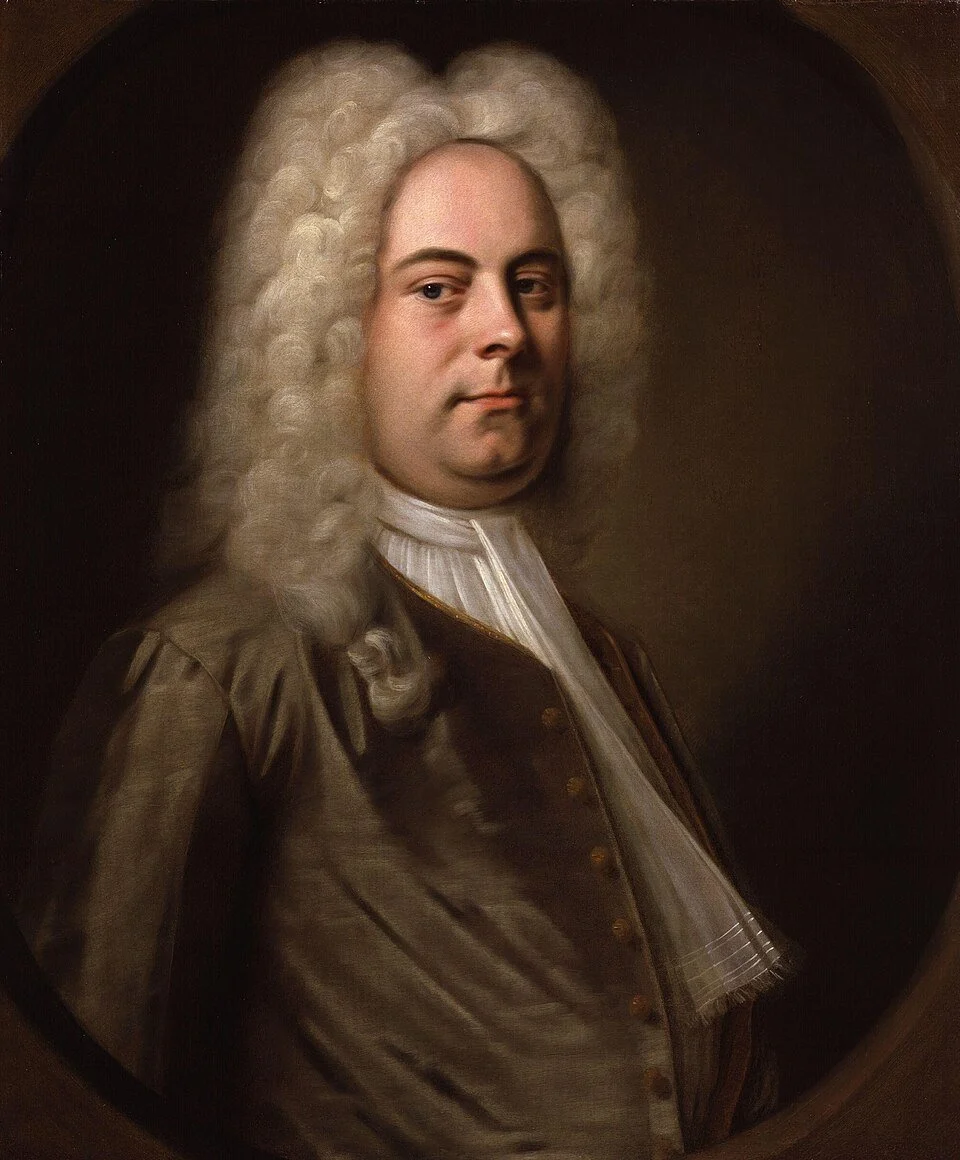
George Frideric Handel by Balthasar Denner
Pop Quiz!
Which composer on today's program is included in the Guinness Book of World Records as the "Most Prolific Composer?
Make your guess below!
-
Sorry, Try again!
Read the section “women composers of the Baroque Period” above to learn more about Mrs Philharmonic’s output.
-
Good Guess! Not Quite, Try Again!
-
Correct!
Telemann is recognized in the Guinness Book of World Records as the Most Prolific Composer. His all-encompassing oeuvre comprises more than 3,000 compositions, half of which have been lost, and most of which have not been performed since the 18th century.
-
Nope. Try Again!
…
-
Incorrect, Try Again!
…
-
Not Quite, Try Again!
Learn More about BFX 2026!